Table of Contents
Table of Contents
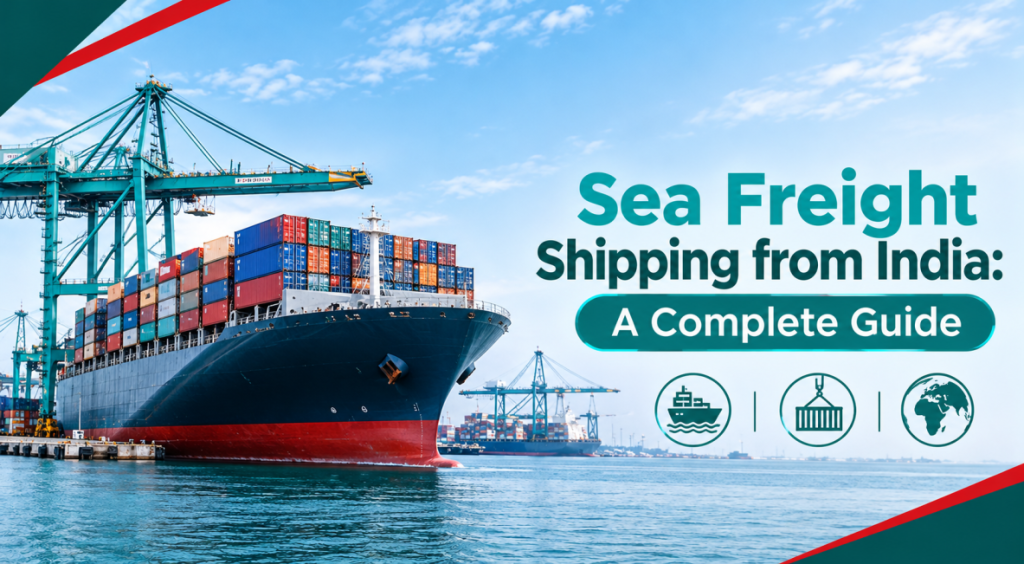
Companies in India use ocean freight for transporting bulky and heavy items internationally. The process involves different stages, such as planning, container selection, origin processes, export processes, ocean transportation, import processes, and delivery. Each step involves proper information and coordination among the various parties, such as the shipper, customs broker, carrier, and freight forwarder.
This article will guide you through the complete ocean freight process in India, from the initial shipment planning to final delivery at the destination. By understanding these steps, businesses can plan international shipments more efficiently, avoid common delays, and manage their freight expenses effectively.
Key Takeaways
- Ocean freight is best suited for bulky and large items.
- FCL and LCL are different terms that indicate the amount of cargo.
- The type of container should be based on cargo weight, size, and handling requirements.
- Documents related to customs, VGM, shipping instructions, and cut-off dates should be checked on priority.
- The charges may come into play in all phases of ocean freight.
Key Planning Decisions Before Shipment
The nature of the shipment, including volume, weight, size, destination, and logistics, plays a fundamental role in selecting the appropriate shipping option.
Choosing between FCL and LCL
Full Container Load (FCL): Full Container Load (FCL) indicates that one client fully books the entire container, while Less than Container Load (LCL) refers to different clients sharing space in a container. Full Container Load generally meets the needs of larger shipments. Less than Container Load is more favourable when shipping smaller cargo, especially when booking an entire container is too costly.
Less than Container Load (LCL): When comparing the two options, consider volume, logistics requirements, destination fees, and delivery timing. Less than Container Load (LCL) involves consolidation and deconsolidation, while Full Container Load (FCL) gives the client the entire container. The choice depends on the total shipment cost, not just the ocean freight rate.
Choosing the Right Container Type
Pick up a container based on the size, weight and loading specifications of the cargo.
- 20-feet container: Ideal for small quantities or heavy cargo but subject to carrying capacity.
- 40-feet container: Gives additional space for larger consignments.
- 40-feet High Cube: Provides extra height internally.
- Reefer container: Keeps temperature for sensitive items.
- Open Top container: Used for top loading and tall cargo.
- Flat Rack container: Can be used for larger or irregularly shaped cargo.
Be sure to check internal size, load limit and loading method required.
Selecting the Port of Loading or Inland Container Depot
The Port of Loading (POL) is the seaport where cargo is loaded onto a vessel. An Inland Container Depot (ICD) is an inland facility for container handling and, where permitted, customs procedures before movement to the seaport. A shipment has a POL, while an ICD may be used for inland handling and clearance. The choice affects transport, handling costs, documents, and schedules.
Stages of a Sea Freight Shipment from India
A shipment progresses through its respective steps of origin processing, customs clearance for export, ocean shipping, and clearance for the destination. The specifics of the process will depend on the cargo type, route, and Incoterms agreed upon.
Origin Operations, Container Stuffing and VGM Confirmation
For full container loads, the shipping line issues an empty container release. The shipper, freight forwarder, or their transporter then collects the empty container from the depot and takes it to the stuffing site. The route and vessel are fixed at booking, before stuffing. After stuffing, the container is sealed and moved to the port or ICD.
The shipper must provide the exact cargo details and appropriate packaging. The verified gross mass is the weight of the stuffed container that includes the cargo, packaging, and tare weight of the container. The VGM is to be submitted before the cutoff deadline for sailing.
Export Customs Clearance and Terminal Operations
The exporter or appointed customs broker prepares the Shipping Bill for submission to Indian Customs. The customs authorities may inspect the shipment prior to issuing a Let Export Order (LEO).
The container must arrive at the terminal before the cutoff registered time. The exporter provides Shipping Instructions with the details of the Bill of Lading (B/L) and approval for its draft. Document, VGM, and gate-in cut-offs are separate requirements. Missing one may result in the cargo moving on a later vessel.
Ocean Transit and Bill of Lading Issuance
The vessel carries the cargo to the destination port, either directly or through transhipment, where cargo changes vessels. A delayed connection can affect arrival.
The shipping line issues the Master Bill of Lading (MBL); the freight forwarder may issue a House Bill of Lading (HBL). An Original B/L may be required to claim cargo. For Telex Release, the original is surrendered at origin, and the carrier authorises release at destination. A Sea Waybill is non-negotiable and generally does not require an original for release. Agree on the document type before shipment.
Arrival, Import Clearance and Final Delivery
The destination agent or carrier issues an arrival notice. The importer or its Customs Broker files the Bill of Entry (BoE), pays applicable duties and taxes, and completes any Customs examination. After Customs issues Out of Charge (OOC), the importer obtains the Delivery Order (DO) from the shipping line or its authorised agent after completing applicable release formalities and charges.
Cargo can then be collected and delivered. LCL goods are usually deconsolidated at a CFS. Demurrage applies when a container remains at the port beyond free time. Detention applies when it stays outside the terminal beyond the permitted period. Clearance or payment delays can trigger these charges.
Documents Required for Sea Freight
Documents depend on the cargo, destination, and transaction. Common examples include:
| Document | Purpose | Usually Prepared or Issued By |
| Commercial Invoice | Declares goods and transaction value | Exporter |
| Packing List | Gives package, weight, and dimension details | Exporter |
| Shipping Bill | Export customs declaration | Exporter or Customs Broker |
| Bill of Entry | Import customs declaration | Importer or Customs Broker |
| Shipping Instructions | Provides details for the B/L | Exporter or forwarder |
| Bill of Lading | Evidence of receipt and contract of carriage | Carrier for MBL; forwarder for HBL |
| Certificate of Origin | States the goods’ country of origin | Authorised issuing body |
| Insurance Certificate | Evidence of cargo insurance, when arranged | Insurer |
| VGM Declaration | Confirms packed container weight | Shipper |
Sea Freight Charges by Shipment Stage
Sea freight charges vary depending on the shipping route, mode of transport, type of cargo, and services provided. Incoterms also determine which party is responsible for transportation costs, risks, and other charges throughout the shipment.
Origin Charges
Origin charges cover the expenses incurred before the cargo leaves the exporting country. These may include:
- Inland transportation from the shipper’s location to the port or Inland Container Depot (ICD).
- Terminal Handling Charges (THC).
- Container Freight Station (CFS) handling charges for Less than Container Load (LCL) shipments.
- Container stuffing and preparation charges.
- Documentation and seal charges.
- Verified Gross Mass (VGM) charges.
- Export customs clearance fees.
Ocean Freight Charges
Ocean freight charges cover the cost of transporting cargo from the origin port to the destination port. The carrier may also apply additional surcharges depending on market conditions, fuel prices, and shipping routes. Common surcharges include:
- BAF (Bunker Adjustment Factor): Covers fluctuations in marine fuel prices.
- PSS (Peak Season Surcharge): Applied during periods of high shipping demand.
- EBS (Emergency Bunker Surcharge): Covers unexpected increases in fuel costs.
- WRS (War Risk Surcharge): Applied to shipments passing through regions with elevated security or war-related risks.
Who Takes Care of Customs Clearance for a Sea Shipment?
The responsibility for customs documentation belongs to exporters and importers. They may use a customs broker to prepare the necessary declarations. Freight forwarders work in collaboration with shipping companies, brokers, carriers, and destination agents.
Select a freight forwarding company that understands the cargo, documentation, route, and regulations. Ask about costs, cut-offs times, customs clearance, delivery, and whether to use FCL or LCL transport. In addition, it is important to have a clear understanding of the roles and responsibilities of each provider while comparing different services.
Planning Your Sea Freight Shipment
Before requesting a quotation, specify the type and description of the cargo, its weight, volume, dimensions, readiness date, place of departure, and destination. These details help the sea freight forwarder assess container requirements, transport arrangements, and the likely cost.
Right Logistics can help businesses assess FCL and LCL options and coordinate the required sea freight arrangements. Contact the team to discuss your shipment requirements and plan the next steps.
Conclusion
Understanding how freight forwarding works in India helps businesses manage international shipments more efficiently, from initial planning and documentation to customs clearance and final delivery. Each stage requires proper coordination between shippers, freight forwarders, carriers, and customs brokers to ensure smooth cargo movement. Having a clear understanding of export and import procedures, shipping documents, container options, and freight charges also helps businesses avoid unnecessary delays and unexpected expenses.
Working with an experienced freight forwarding partner can simplify these processes by providing guidance on documentation, customs requirements, transportation, and shipment coordination. With proper planning and the right logistics support, businesses can make international shipping more cost-effective, reliable, and hassle-free.
Frequently Asked Questions
Is Sea Freight the Same as Ocean Freight?
The terms are generally interchangeable and refer to transporting goods by ship. A freight forwarder may also arrange related origin and destination handling.
Can I Ship a Small Quantity by Sea from India?
Yes. LCL permits smaller shipments to utilize space in containers by combining freight together at the starting point and separating them at the destination. Before making reservations, it would be beneficial to compare total pricing and processing time with other modes of transport.
What’s the Difference Between Demurrage and Detention?
Demurrage is applicable in cases when the container has been at the port for longer than the allowed free time. Detention is applicable when it has been out of the port longer than allowed free time. The terminology and pricing depend on the chosen carrier and the location.