Table of Content
Table of Contents
Moving goods between different countries requires much more than making arrangements for transport. Exporters and importers are required to coordinate carriers, customs authorities, transport companies, documents and delivery schedules. One missing document, wrong classification of goods or a missed cargo cut-off can mean delays in shipment as well as higher costs.
A freight forwarder will coordinate these activities between the different parties. Shipping companies and airlines deliver the cargo, customs authorities control its transfer, whereas transport companies are responsible for inland transport. Each party has its own responsibility in the system.
This guide is meant to explain how freight forwarding will work in case of the export from and import in India, what documents may be needed by businesses, what fees are applied and what factors to keep in mind while choosing the freight forwarder.
Key Takeaways
- Freight forwarders coordinate cargo transportation, documentation, and related logistics arrangements.
- Export and import shipments follow different customs and delivery procedures.
- Commercial invoices, packing lists, and transport documents are essential for international shipments.
- Freight costs depend on cargo details, transport methods, routes, and additional services.
- Businesses should assess a forwarder’s network, experience, communication, and pricing before making a choice.
What Is Freight Forwarding?
Freight forwarding is defined as the process of organizing goods transport, either at the national or international level. The process itself is made of several stages, such as arranging cargo space, handling transportation documents, coordinating customs clearance, and ultimately arranging transport from the origin to the destination of the goods.
Thus, typically freight forwarders acquire cargo space through the use of carriers, shipping lines or airlines and do not possess any aircrafts or ships. Instead, the freight forwarders only coordinate shipping process.
Key Responsibilities of a Freight Forwarder
Freight forwarders manage various aspects of cargo logistics and transportation to ensure smooth shipment movement. Their responsibilities include:
- Space Booking: Arranging cargo space with shipping lines, airlines, or other transport providers.
- Documentation: Preparing and processing the necessary documents for cargo shipments.
- Shipment Tracking: Providing shipment updates and information throughout the transportation process.
- Cargo Insurance: Arranging cargo insurance when required to protect shipments against potential risks.
- Logistics Coordination: Managing different aspects of cargo transportation and coordinating with relevant parties.
The exact responsibilities of a freight forwarder may vary depending on the services agreed upon with the customer.
How Freight Forwarding Works for Exports from India
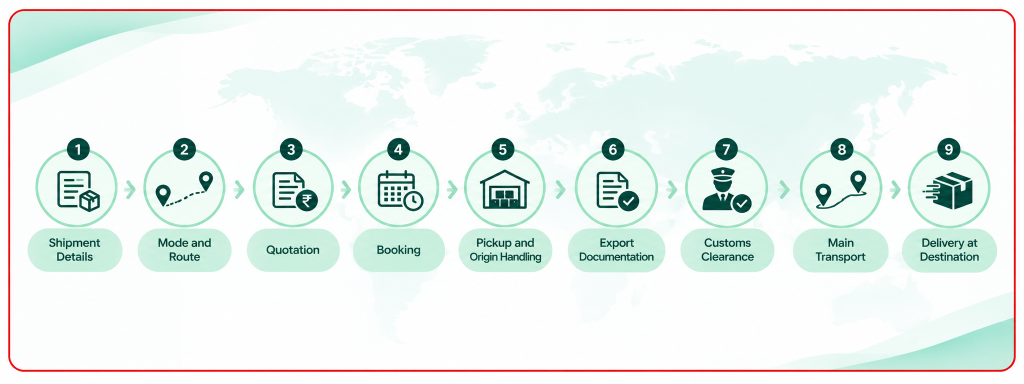
Shipping commodities involves coordination between seller, freight forwarder, shipping company, Customs officers, and agent at destination point. Generally, there are 8 steps in this process:
Step 1. Share shipment information
The exporter provides information about the nature of goods, HS Code, weight and size of shipment, country of destination, date of readiness of shipment, as well as Incoterms used. HS Code is used for the classification of goods for customs purposes. Incoterms refer to the worldwide guidelines for trade that explain who is responsible for the payment, as well as the costs and delivery of the goods.
Step 2. Choose the way of transportation
Shipping method is determined by the urgency of the shipment, the amount of cargo, and cost and transit-time requirements. For example, air freight services may be suitable for time-sensitive goods, while ocean freight services may be more economical for larger shipments. Multimodal shipment uses two or more modes of transport, such as road and sea, under a single contract.
Step 3. Get quotations and confirm the booking
The freight forwarders collect the quotations based on the description of your shipment, its transportation route, kind of transport used, and fees required. The better you compare the services and pricing of each of them, the more informed decision will you make about your booking.
Step 4: Cargo Collection, Packing, and Processing at the Point of Departure
The shipment is collected and prepared for transport. This involves packing, printing labels, and moving the goods to the seaport or airport. If sea freight is used, the cargo may pass through a Container Freight Station (CFS) or an Inland Container Depot (ICD) for handling and container stuffing. Packed containers must comply with Verified Gross Mass (VGM) requirements. VGM is the total weight of the packed container, including the cargo, packing material, and the container’s tare weight.
Step 5: Export Documents Preparation
The exporter submits various paperwork like invoices and packing lists. The exporter also has to submit a shipping instruction form which contains specifics of the transportation information. The exporter must evaluate the draft bill of lading or other required documents before issuing it. Wrong information may result in unforeseen costs or delays.
Step 6: Customs Clearance Procedure
The Shipping Bill is processed electronically with the Indian customs authority through the export or the customs broker. The customs authority may decide to check the shipment if selected. Upon completion of all the formalities, customs authorities provide an export permit called Let Export Order (LEO).
Step 7: Final Transportation and Shipment Monitoring
The cargo is given to the carrier for the inland journey or for sea transportation. The shipping agency or airline would subsequently issue a master bill of lading or a master air waybill. If the freight forwarder drafts its own transport documents, it would be referred to as House Bill of Lading or House Air Waybill for the clients. The forwarder conveys shipment information throughout the shipping process.
Step 8: Arrival and Delivery to Place of Destination
The foreign agent organises the customs clearance at the place of arrival. The importing party pays the necessary duties according to the terms of the contract. Once it is cleared, the cargo is delivered to the required destination.
How Freight Forwarding Works for Imports into India
The process of importing involves a number of steps, which include assessing documentation, customs clearance, paying taxes, releasing goods from a port, and clearing the shipment. The entire process usually includes the following steps:
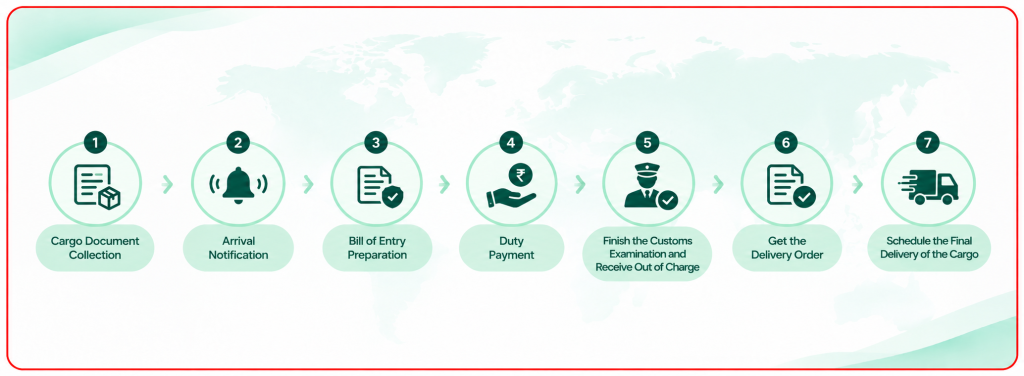
Step 1: Cargo Document Collection
The foreign trader sends the invoice, packing list, and B/L or AWB to the importer and the freight forwarder in advance of the goods arriving at the port.
Step 2: Arrival Notification
The shipper or the airline communicates with the buyer and informs them about the shipment’s arrival and other details regarding it.
Step 3: Bill of Entry Preparation
This is a customs form needed to register the import and establish the tax amount and other duties, and is handled by an import agent or customs broker.
Step 4: Duty Payment
Customs duties and taxes are determined based on the classification of goods, their assessable value, and the government regulations. The importer must ensure payment is made before the cargo can be cleared for delivery.
Step 5: Finish the Customs Examination and Receive Out of Charge
If the cargo is selected by Customs, it has to be examined. Once the full checks and procedures are completed, Customs issues Out of Charge (OOC), thus releasing the goods.
Step 6: Get the Delivery Order
Once the release costs have been paid to the shipping line or the airline, the importer receives a Delivery Order (DO). The DO allows the importer to take possession of the cargo since the goods should not be taken out of the port or airport without the release order.
Step 7: Schedule the Final Delivery of the Cargo
When the cargo is released, it is moved from the port, airport, CFS or ICD to the importer’s office or other designated place as per the agreed service.
Documents Used in Freight Forwarding
Shipping documents support cargo handling, customs assessment, transportation, and payment procedures. Requirements vary according to the goods, route, and applicable regulations.
| Document | Export or Import | Usually Prepared By |
| Commercial Invoice | Both | Exporter or seller |
| Packing List | Both | Exporter or seller |
| Import Export Code (IEC) | Both | Issued by DGFT (Government of India) |
| Shipping Bill | Export | Exporter or Customs Broker |
| Bill of Entry | Import | Importer or Customs Broker |
| Bill of Lading | Both | Shipping line for Master; forwarder for House |
| Air Waybill | Both | Airline or carrier for Master; forwarder for House |
| Certificate of Origin | Both | Exporter or authorised issuing body |
| Insurance Certificate | Both | Insurance provider |
| Letter of Credit Documents | Both, when applicable | Exporter or bank |
| Shipper’s Declaration for Dangerous Goods | Both, for DG cargo | Shipper |
| Safety Data Sheet | Both, when applicable | Manufacturer or supplier |
| Delivery Order | Import | Shipping line or airline |
| Shipper’s Letter of Instruction | Export | Exporter |
| GST/LUT documents | Export | Exporter |
A CFS is a facility for handling and consolidating cargo. An ICD is an inland customs facility connected to a seaport or other transport network. The documents required may vary by shipment, so confirm them before dispatch.
What Affects Freight Forwarding Costs?
Freight forwarding costs depend on cargo weight and dimensions, destination, transport method, route, and additional services. Incoterms also affect which party pays particular charges.
Main Charges Included in a Freight Forwarding Quotation
Common charges include:
- Main freight: Air or sea transportation.
- Fuel and other surcharges: Carrier-imposed additional costs.
- Origin charges: Terminal handling and CFS fees.
- Documentation fees: Processing shipping documents.
- Customs brokerage: Customs clearance coordination.
- Destination charges: Handling at the arrival port or airport.
- Cargo insurance: Cover for specified transit risks.
- Demurrage and detention: Charges for exceeding permitted cargo or container free time.
Freight Forwarder Charges vs Customs Duties and Taxes
Freight forwarder charges cover the services and transport arrangements provided. Customs duties and taxes are government-imposed amounts. A freight forwarding service provider can help coordinate duty calculations and payment but does not decide government rates.
How Is Chargeable Weight Calculated for Air Freight?
Air freight is generally charged using whichever is higher: actual weight or volumetric weight. Volumetric weight reflects the space occupied by the cargo, and the applicable calculation divisor depends on the carrier and service.
To note: many customers compare quotes by focusing on the total price, but it takes more time to review the individual costs and services that the quotes include.
Cargo That Needs More Than Standard Freight Forwarding
There are certain shipments that need additional documentation, handling arrangements, or transportation planning.
Dangerous Goods (DG) Shipping
For the transport of dangerous goods, proper classification must be carried out, approved packaging should be used, and labelling and declarations should be made. For air cargo, the IATA Dangerous Goods Regulations (IATA DGR) must be followed. For sea freight shipments, the International Maritime Dangerous Goods (IMDG) Code is applicable.
Aircraft on Ground (AOG) and Urgent Aircraft Parts
AOG shipments involve aircraft parts that need to be sent to put a grounded aircraft back into operation. Administrative delays can compromise operational activities, hence it is necessary to coordinate the best route and communicate clearly.
Large and Project Freight
Project freight consists of big gear, factory machinery, and heavy junctions that cannot be transported by the usual shipping arrangement. It is possible that a project cargo freight forwarding might need route surveys, unique transportation equipment, hoisting arrangements, and a precise handling plan.
Common Freight Forwarding Delays and How to Avoid Them
Documentation errors, customs checks, missed schedules, and cargo discrepancies can affect shipment movement.
| Problem | Common Cause | How to Prevent It |
| Incorrect HS Code | Wrong classification | Verify the code before filing. |
| Missing documents | Missing or mismatched details | Check documents before submission. |
| Missed cargo cut-off | Late cargo arrival | Plan collection in advance. |
| Weight or VGM mismatch | Incorrect declared weight | Verify cargo and container weights. |
| Undeclared dangerous goods | Incomplete cargo information | Disclose goods and provide DG documents. |
| Late duty payment | Funds not arranged | Prepare payment and coordinate with the Customs Broker. |
Things to Check Before Choosing a Freight Forwarder
The right freight forwarder should understand the shipment requirements and coordinate the necessary transport arrangements.
Global Network
Check its overseas agents and connections at the shipment’s origin and destination.
Transportation Options
Look for suitable air, sea, road, and multimodal arrangements.
Specialised Cargo Experience
Ask about relevant experience with dangerous goods, AOG shipments, and project cargo.
Industry Credential
Check the validity and scope of relevant registrations, accreditations, and certifications.
Communication and Tracking
Confirm how often shipment updates are provided and how issues are communicated.
Transparent Pricing
Review the quotation for freight, handling, documentation, and additional charges.
Industry Experience
Choose a provider familiar with the type of goods, route, and handling requirements involved.
Frequently Asked Questions
Is a Freight Forwarder the Same as a Customs Broker?
No. The freight forwarder’s role is to facilitate the transport of goods and logistics. The role of the customs broker is to prepare customs-related documents for the client. Although the two jobs could work hand-in-hand, they hold different responsibilities.
Difference Between Freight Forwarder and Shipping Line
A shipping line is a company that operates vessels for the purpose of transporting goods. The freight forwarder is a company that books space for cargo with shipping lines and arranges any other requirements such as documentation, land transport, etc.
Is It Necessary to Have an IEC to Export or Import Using a Freight Forwarder?
Usually, a company that imports or exports goods from India is required to obtain an IEC from the Directorate General of Foreign Trade. It should be noted that the use of a freight forwarder does not exempt the importer/exporter from their obligations to comply with applicable regulations.
What Kind of Information Is Required in Order to Obtain a Freight Forwarding Quote?
Provide the freight forwarder with the nature of the goods, the weight, dimensions, points of origin and destination, preferred mode of transport, Incoterms applicable, and date of delivery.
Is it Possible for Freight Forwarders to Facilitate Door-to-Door Delivery?
Absolutely, freight forwarders can undertake the management of pickup, global transport, customs clearance, and delivery, depending on the level of service agreed upon. Make sure to confirm which services are included and what the costs are before making any reservation.
Who Should Bear the Customs Duty of an Imported Shipment?
Usually, it is the duty of the importer to pay any duty or tax applicable. But the responsibility associated with certain costs may differ according to the Incoterms.
Are Freight Forwarders Able to Ship Hazardous Goods?
Yes, freight forwarders that have the experience and capability can arrange delivery of hazardous goods. Requirements for classification, packaging, labelling, and documentation must be met.
How Long Will It Take for My Goods to be Delivered?
The amount of time needed for shipping goods varies depending on which mode of transport is used, what route is taken, which carriers are working and how the cargo is cleared through customs. Moving cargo overland and handling it at its destination may also affect shipping duration. Without referring to a shipment-specific delivery estimate, general assumptions about how long it will take to deliver goods should be treated with caution.
Conclusion
To ensure successful delivery of goods, all the relevant documentation should be in order, customs clearance needs to be obtained in time, transportation arrangements need to be appropriate, and every stage of delivery should be properly coordinated. The engagement of an experienced freight forwarder will help businesses comply with all these requirements.